Some links here are affiliate links. If you buy through them, this site earns a small commission — the recipes are unaffected. Read more →
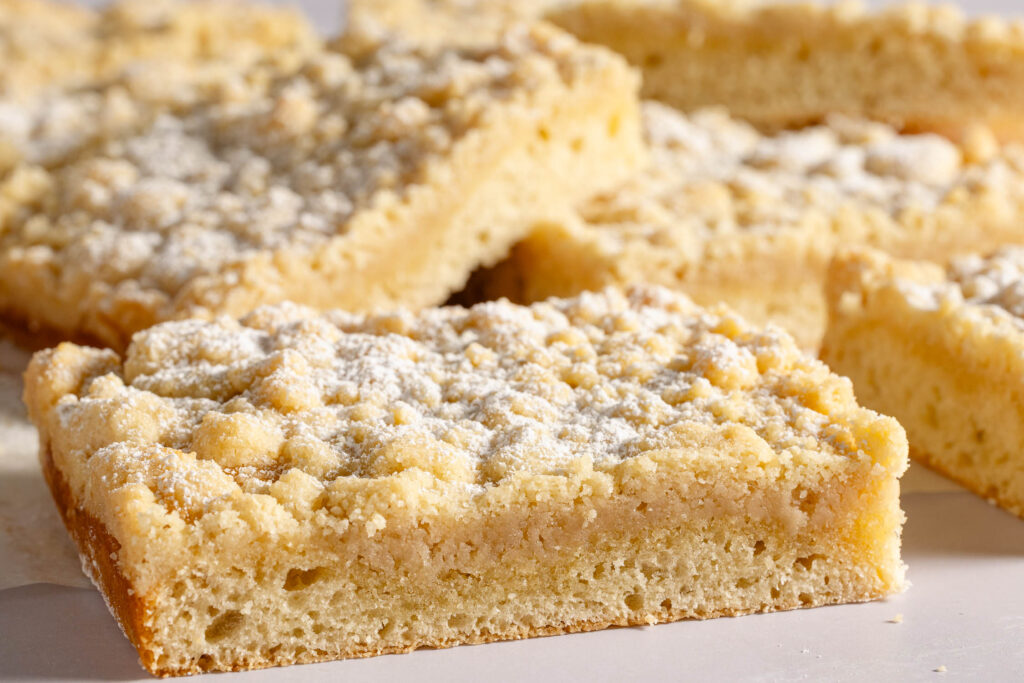
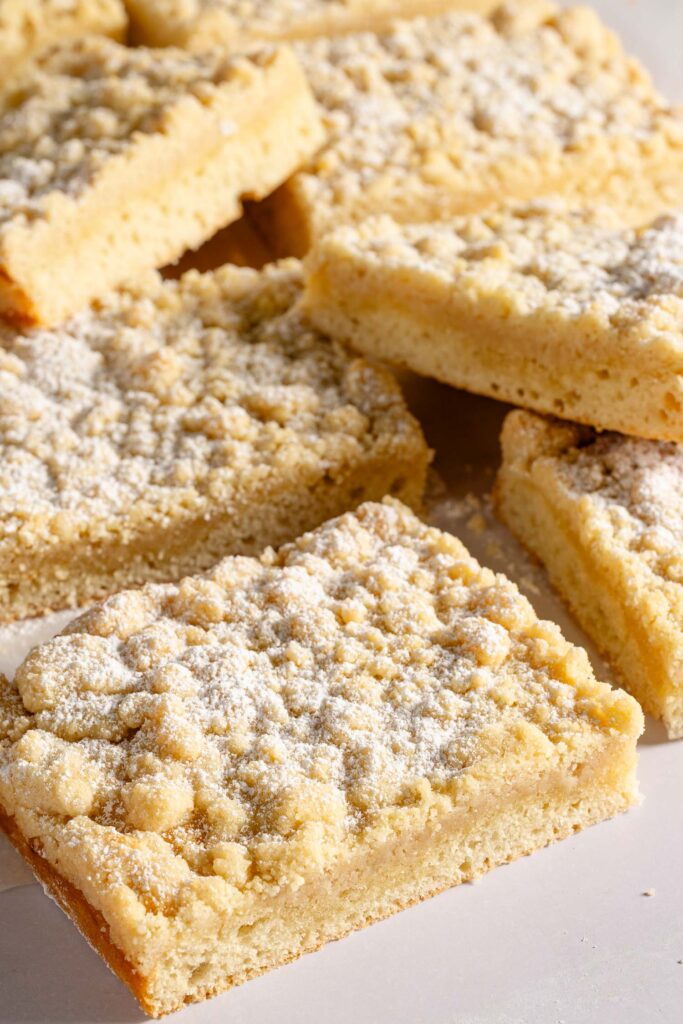
Streuselkuchen is a classic German crumb cake made from soft, lightly sweet yeast dough topped with a generous layer of buttery streusel. Simple, rustic, and cozy: the kind of cake made for an afternoon coffee rather than a special occasion.
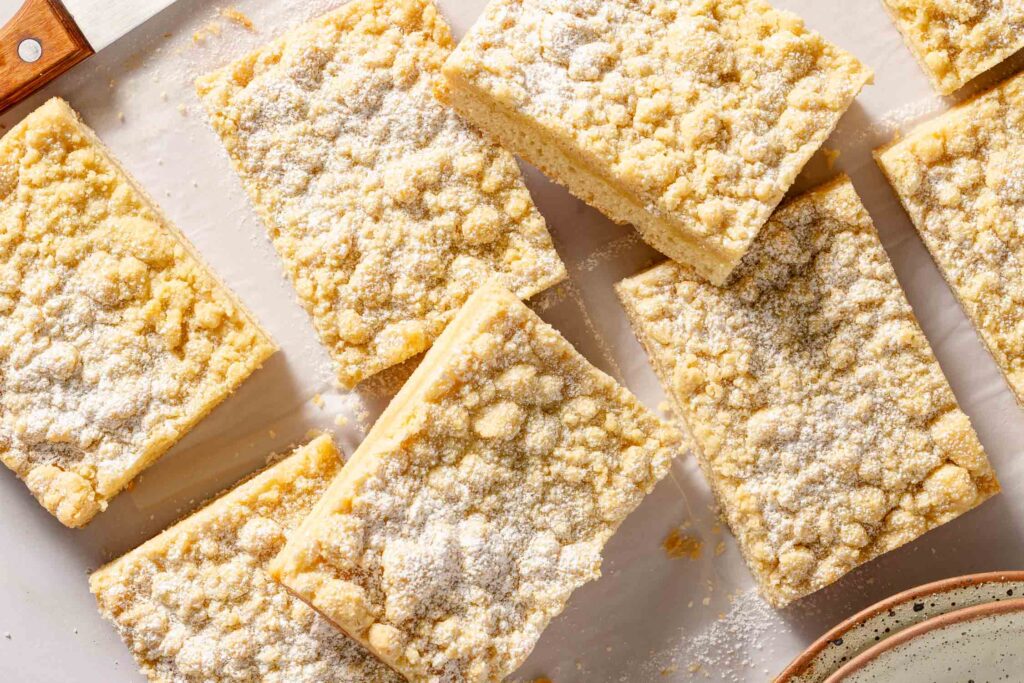
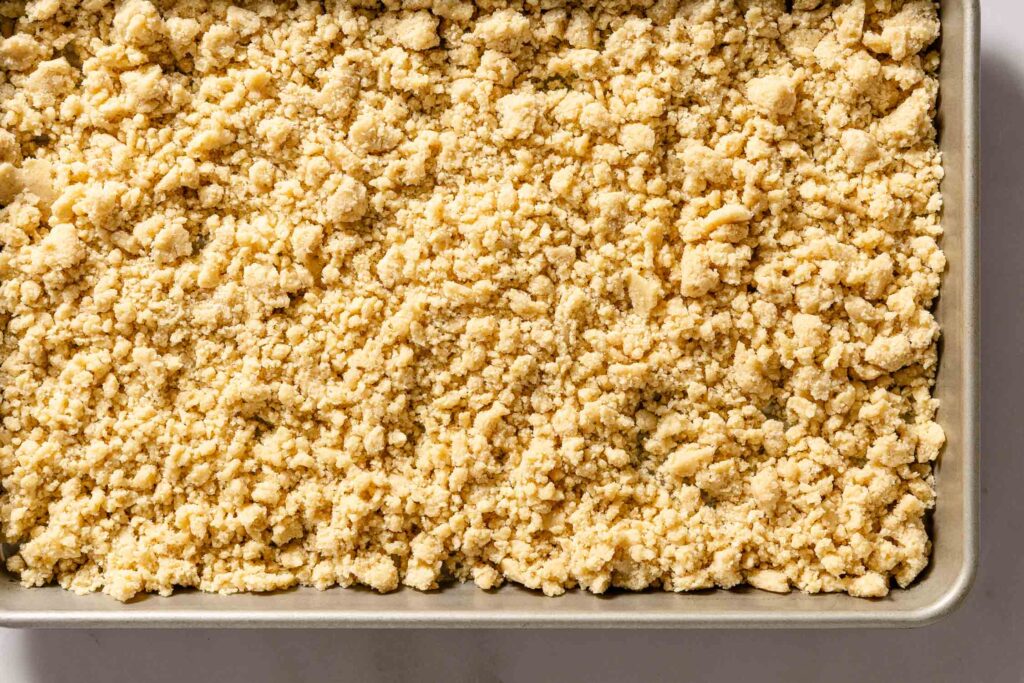
What makes it so good is the contrast. The dough is fluffy and tender, while the streusel bakes into crisp, buttery crumbs with a slightly chewy center. The soft dough makes the streusel seem crisper; the buttery crumbs make the dough seem even more tender. Neither part is extravagant on its own, but together, they make one of Germany’s most beloved coffee cakes.
“What makes it so good is the contrast. The dough is fluffy and tender, while the streusel bakes into crisp, buttery crumbs with a slightly chewy center.”
My version keeps the spirit of traditional Streuselkuchen, but uses a few small updates. Tangzhong (a flour-and-milk paste cooked into a roux) holds onto extra moisture in the dough, so the cake bakes up softer and stays moist for an extra day or two. An overnight rise builds flavor and pushes most of the active work to the day before — the next morning all that’s left is sprinkling on the streusel and baking.
Why This Recipe Works
I’ve made a few upgrades to improve the flavor, texture, and freshness while avoiding, I hope, straying too far from the cake’s traditional core.
- Tangzhong keeps the cake soft. This technique, often used in Japanese milk bread, involves cooking a small portion of the flour and liquid into a paste before adding it to the dough. The starches gelatinize and absorb extra liquid, creating a dough that bakes up softer, moister, and slower to stale.
- An overnight rise improves flavor. The slow refrigerator rise gives the dough more depth without making the process more difficult.
- A generous streusel layer gives the best texture. This recipe uses enough crumb topping to make Streuselkuchen feel like a true German crumb cake, not just a sweet bread with a sprinkle on top.
- A little brown sugar adds depth. Traditional streusel is usually made with white sugar, butter, and flour, but a small amount of brown sugar gives the topping a richer flavor while still keeping it classic.
What is Streuselkuchen?
Streuselkuchen is a German crumb cake, or German streusel cake, made with a soft yeast dough and a buttery streusel topping. Unlike American-style crumb cake, the base is less sweet and more bread-like, which makes it a perfect contrast to the rich crumb topping.
The cake is often associated with Silesia, but it is popular throughout Germany and Poland. It’s a classic Sonntagskuchen, or Sunday cake, often served in the afternoon with coffee, similar to Marmorkuchen or Pflaumenkuchen.
Both the cake and the streusel are simply flavored, relying mostly on good butter for richness. Traditionally, the streusel doesn’t even include cinnamon or brown sugar, just good-quality butter, granulated sugar, and flour. There are a host of Streuselkuchen variations, with fruit, jam, or custard layered between the cake and the streusel.
Streuselkuchen vs. American Crumb Cake
Streuselkuchen is similar to American crumb cake, but the base is usually a lightly sweet yeast dough rather than a soft butter cake. The streusel is also traditionally simpler: butter, sugar, and flour, often without cinnamon or brown sugar. In that sense, Streuselkuchen is closer to a yeast crumb cake than a butter-based coffee cake.
Key Ingredients
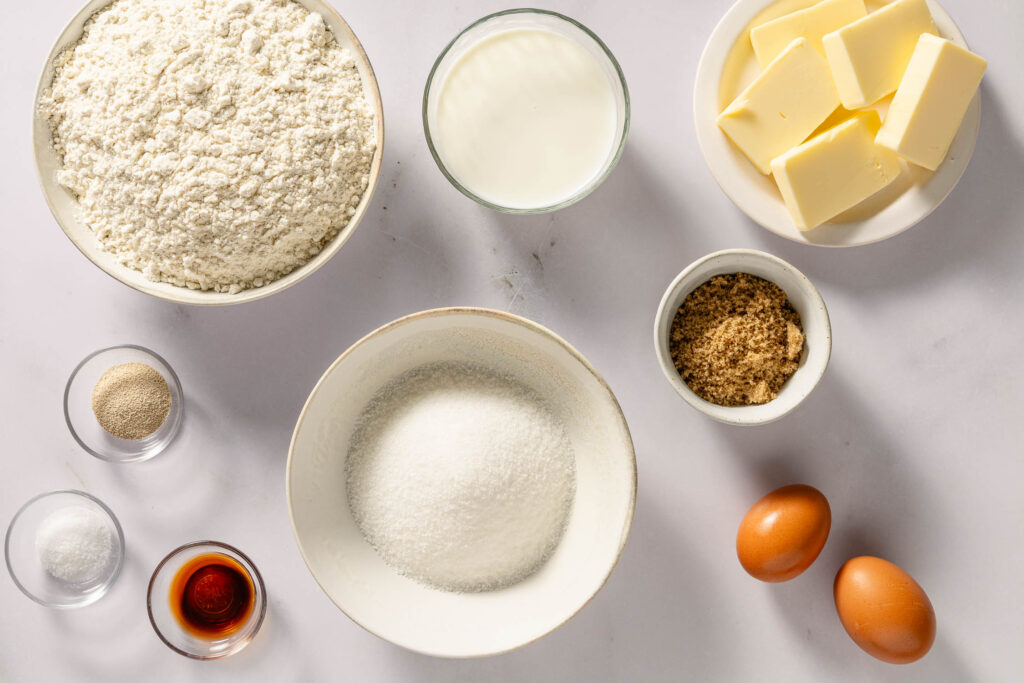
- All-purpose flour: Keeps the yeast dough soft and tender. It also gives the streusel enough structure to form buttery clumps.
- Granulated sugar: Sweetens the dough and streusel while helping to tenderize the crumb.
- Brown sugar: Not traditional, but a small amount adds subtle molasses flavor and helps create a streusel with crisp edges and a slightly chewy center.
- Yeast: I use SAF Red Instant Yeast. It can be mixed directly into the dry ingredients without blooming first.
- Salt: Brings out the flavors in the cake and balances the sweetness.
- Whole milk: Adds richness and softness. You can substitute 2% or 1% milk in a pinch, but avoid nonfat milk.
- Egg: An egg adds richness to the dough, and an egg wash helps affix the streusel to the cake.
- Butter: Use softened butter for both the dough and streusel. Butter gives the cake its classic rich flavor.
- Vanilla: A splash of vanilla extract adds complexity and rounds out the flavor of the dough.
Equipment
How to Make Streuselkuchen
Streuselkuchen is made in three parts: the tangzhong, the yeast dough, and the streusel.
The day before baking, make the tangzhong by cooking a small amount of flour and milk into a thick paste, and set aside to cool slightly. Then add all of the dough ingredients and knead it into a soft, tacky dough. Let the dough rise slowly in the refrigerator overnight.
Make the streusel the day before or the day you bake the cake, and chill it in the freezer.
The next day, press the dough into a 9×13-inch pan, and let it proof while the oven preheats. Brush it lightly with egg wash, and scatter the chilled streusel over the top, then bake until the dough is puffed and the crumbs are lightly golden.
For the Tangzhong
1 Make the tangzhong:
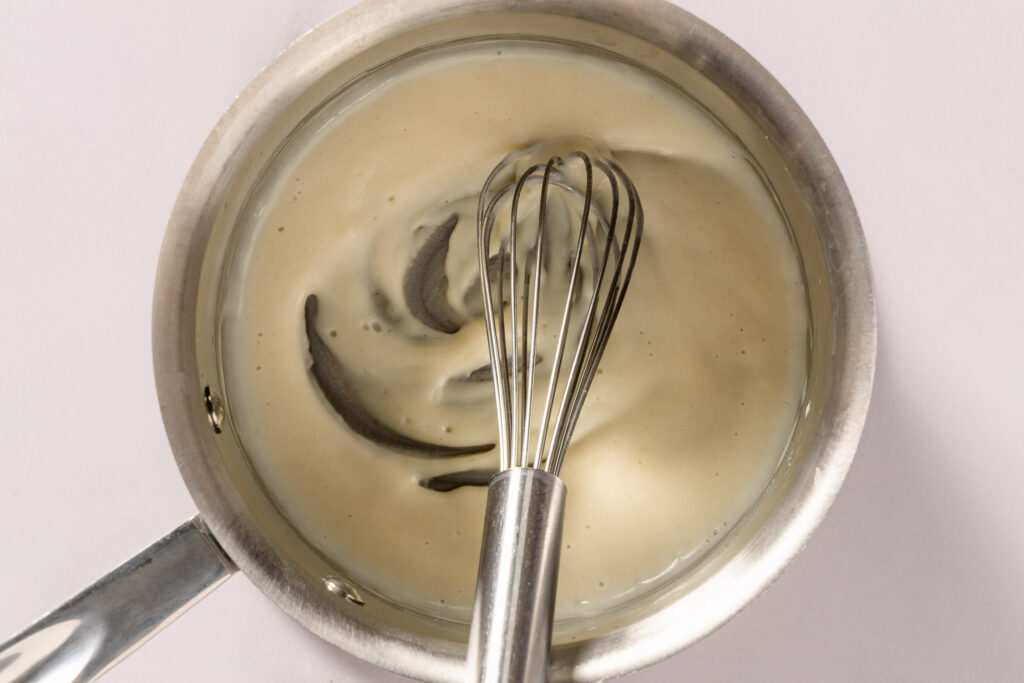
In a small saucepan, whisk 15g (2 tablespoons) all-purpose flour into 75ml (5 tablespoons) whole milk until smooth. Set the pan over medium heat. Cook, whisking constantly, until thick, about 1 minute. Remove from the heat and set aside to cool slightly.
For the Dough
1 Mix the dough:
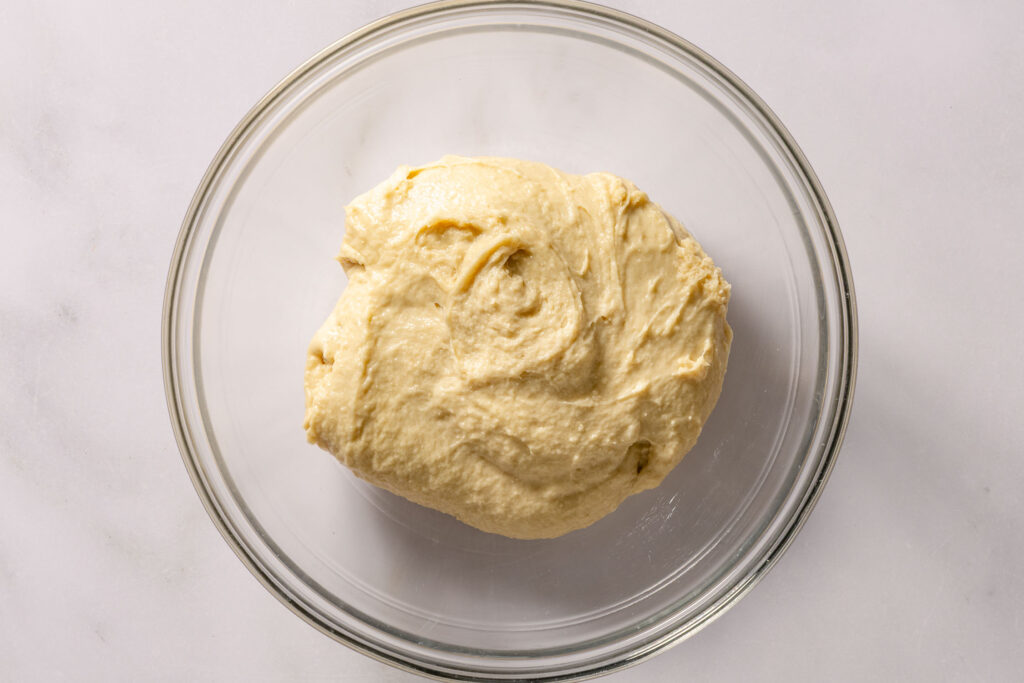
To the bowl of a stand mixer fitted with the dough hook attachment, add 240g (2 cups) all-purpose flour, 50g (1/4 cup) granulated sugar, 1 teaspoon instant yeast, 1/2 teaspoon kosher salt, all the tangzhong, 80ml (1/3 cup) whole milk heated to 40°C (110°F), 1 large egg at room temperature, 42g (3 tablespoons) softened butter, and 1 teaspoon vanilla extract. Mix on low speed (speed 1 on a KitchenAid) until the dough comes together, then increase to medium speed (speed 2) and continue kneading for 8 minutes. The dough will be smoother, but still very sticky. Avoid adding more flour.
2 Bulk fermentation:
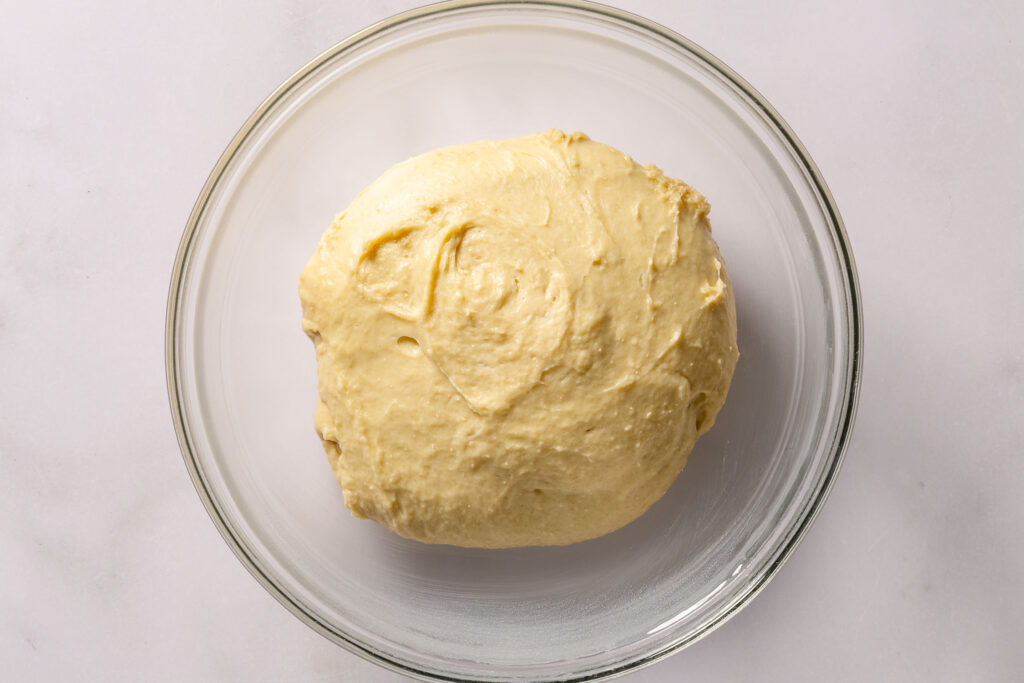
Shape the dough into a ball, and place it in a lightly greased bowl. Cover the bowl and let it rise in the refrigerator overnight, or up to 24 hours. The dough will not rise much.
For the Streusel
1 Make the streusel:
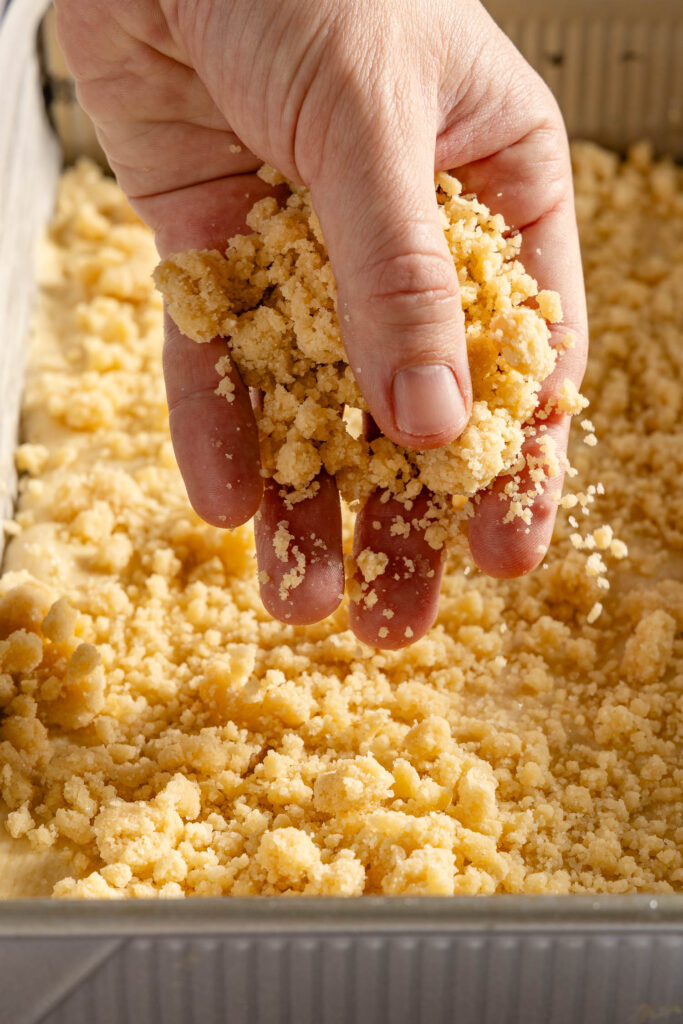
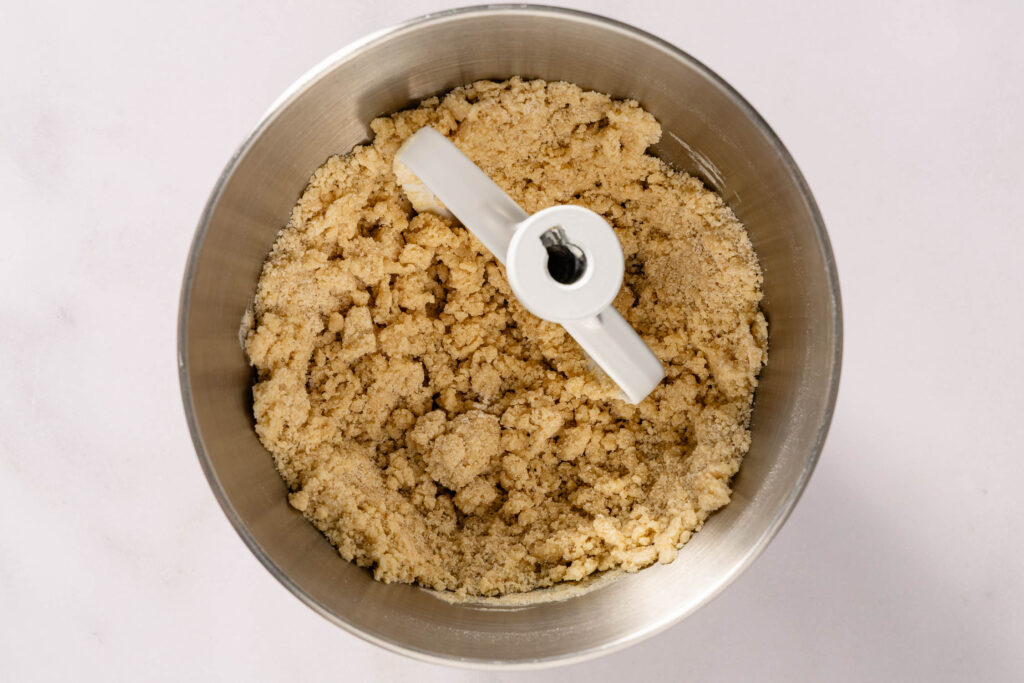
To the bowl of the stand mixer (no need to wash it out) fitted with the paddle attachment, add 200g (1 2/3 cups) all-purpose flour, 100g (1/2 cup) granulated sugar, 40g (3 tablespoons) light brown sugar, and 1/4 teaspoon kosher salt. Whisk to combine. Add 140g (10 tablespoons) softened butter, and mix on medium speed until combined, with pea-sized and larger clumps, about 1 minute.
Spread the streusel into a single layer on a small tray and let it chill in the freezer until ready to use.
Assemble and Bake
1 Get ready:
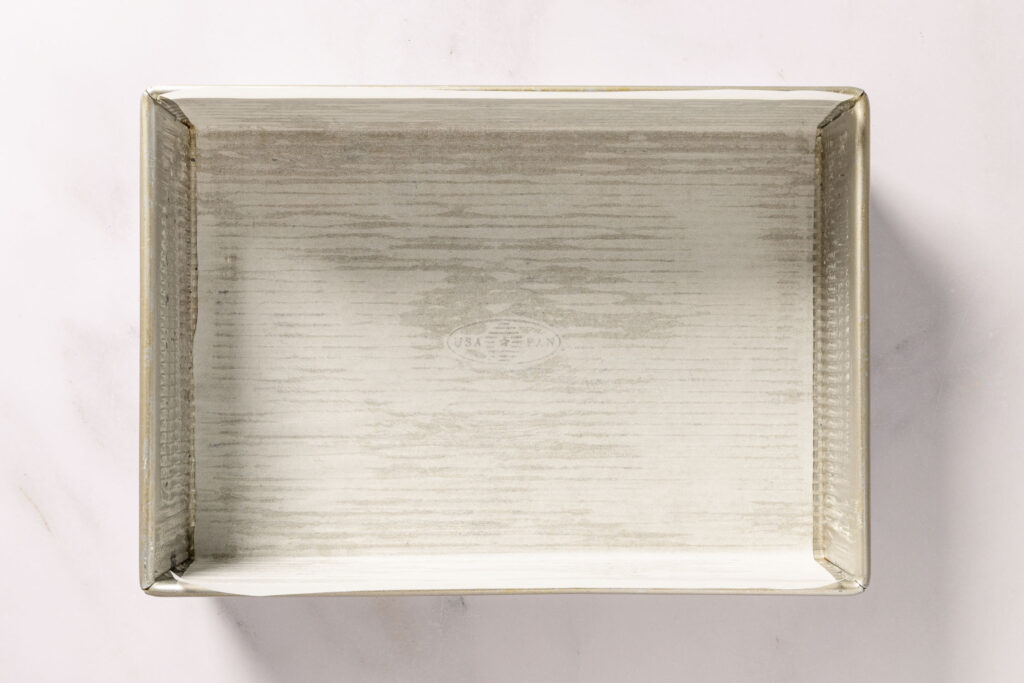
The next day, when ready to bake, lightly grease a 22x33cm (9×13-inch) pan with butter or baking spray. Line the pan with parchment paper so that the ends of the paper extend beyond the long sides of the pan, forming a sling.
2 Shape the dough:
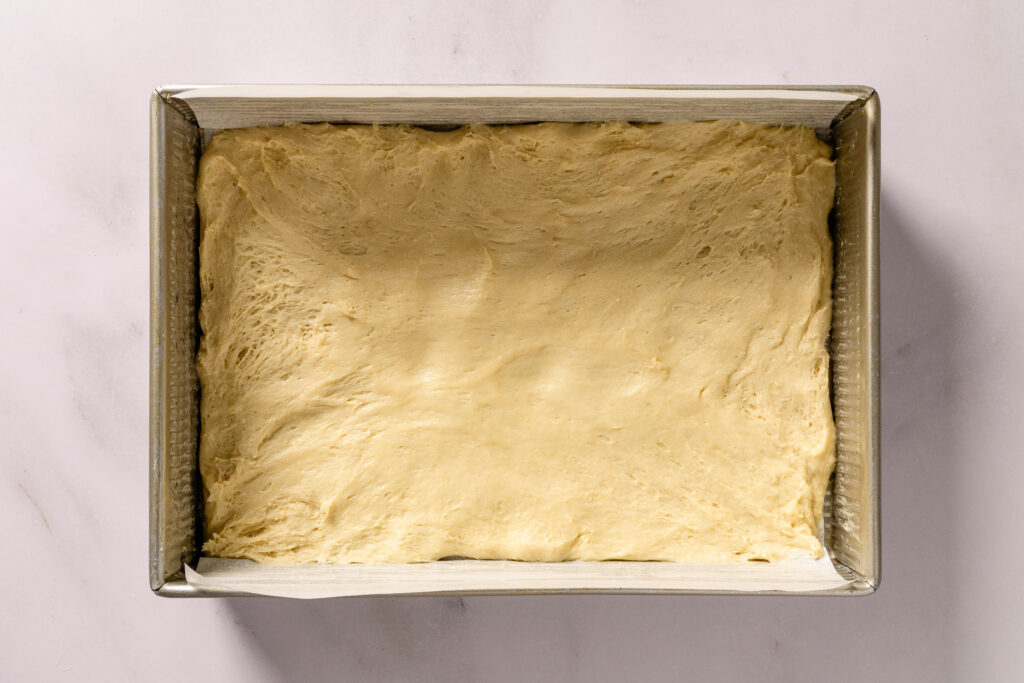
Punch down the dough, then transfer it to the prepared pan. Gently press and stretch the dough to the edges of the pan. If the dough is too sticky, grease your hands to prevent it sticking to you. Avoid adding flour.
3 Preheat the oven to 175°C (350°F):
The next day, arrange a rack in the center of the oven and preheat to 175°C (350°F).
4 Proof:
Let the dough sit for 20 to 40 minutes while the oven preheats. It should lose some of its chill and puff slightly. It does not need to double.
5 Add the streusel:
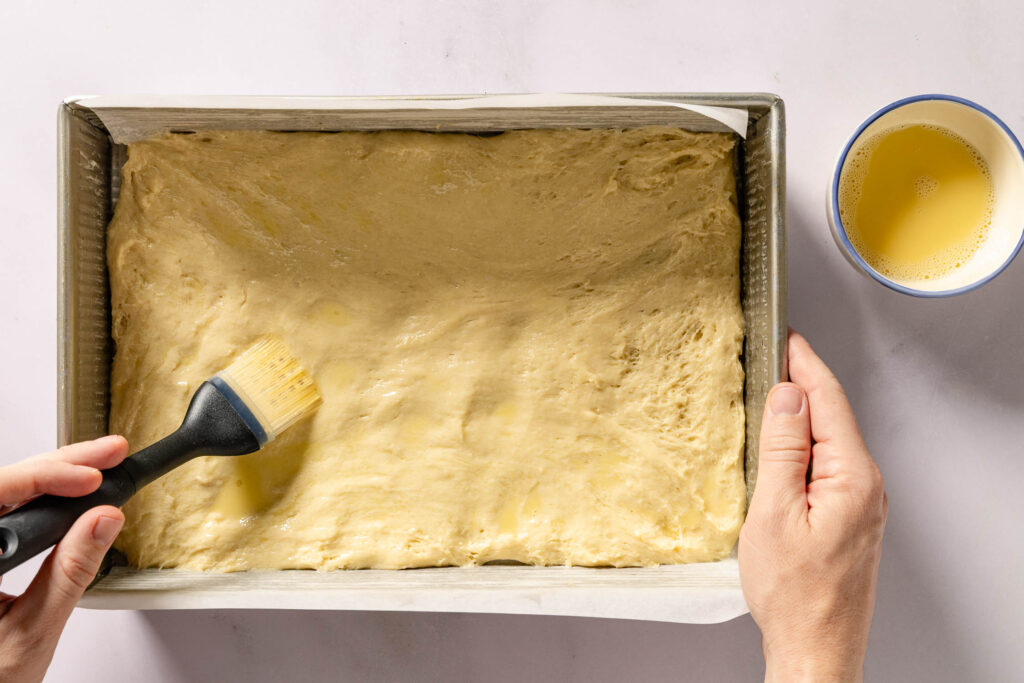
In a small bowl, beat 1 large egg with 15ml (1 tablespoon) of water. Use a pastry brush to brush the surface of the dough with a light layer of the egg wash. You won’t need all of the egg wash. Scatter the streusel evenly all over the dough.
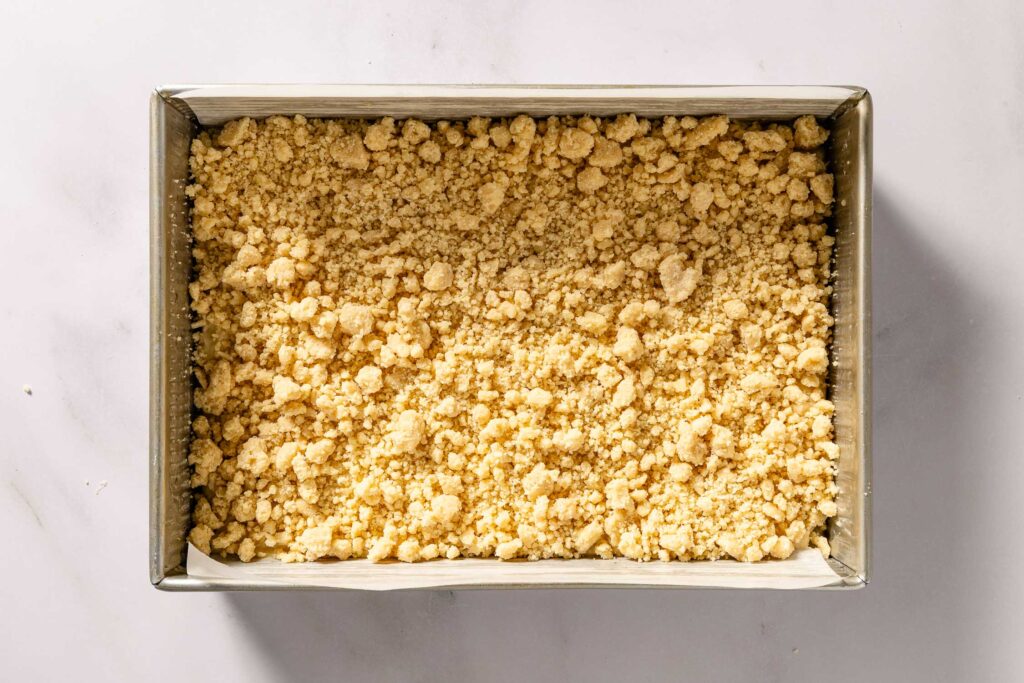
6 Bake:
Bake the streuselkuchen in the preheated oven for 30 to 35 minutes, or until the streusel has begun to brown and the cake has puffed. The interior temperature at the center should be about 88-93°C (190-200°F).
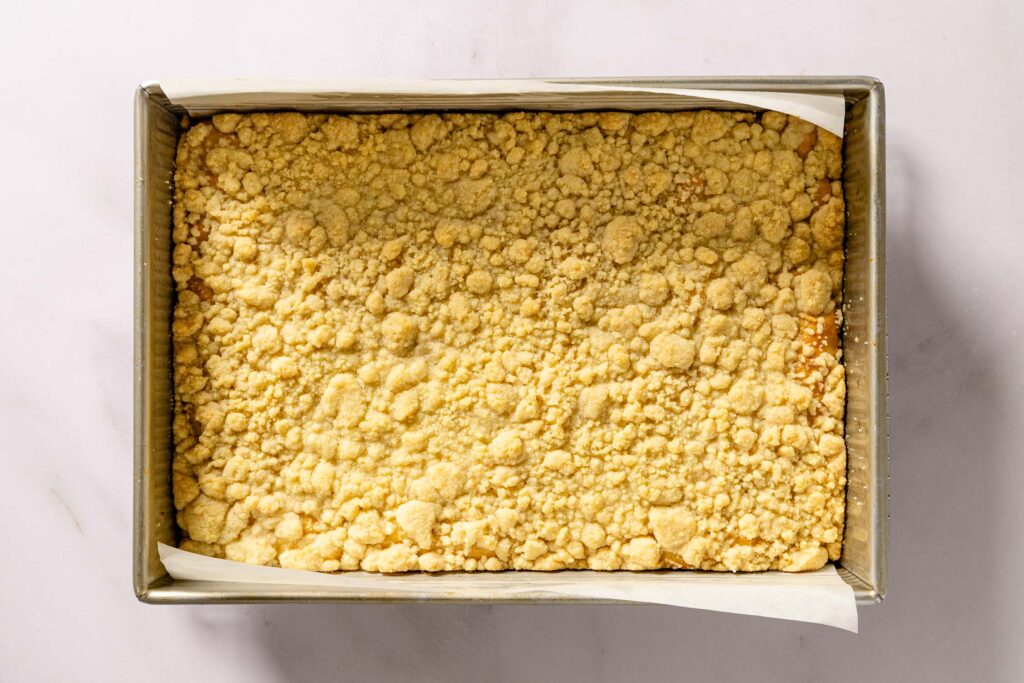
7 Cool and serve:
Remove the pan from the oven and set it on a wire rack to cool for 20 minutes. Use the parchment paper sling to lift the cake out of the pan. Slice into squares, and serve warm or room temperature.
Tips for Success
- Pay attention to ingredient temperature: The temperature of the ingredients affects how the dough mixes and how quickly the yeast ferments. Use room temperature butter and eggs in the dough, very soft butter for the streusel, and heat the milk used in the dough to about 40°C (110°F).
- Chill the streusel: Chilling the streusel helps it maintain its shape during baking. While the dough is rising, make the streusel. Transfer the streusel to a tray that fits in your freezer, and let it chill until assembling the cake.
- Bulk fermentation (first rise): The dough will not rise much during bulk fermentation because of how rich the dough is and the slow fermentation in the refrigerator. The dough may puff slightly, but it will not double in size.
Variations and Substitutions
- Jam: Add a sweet fruity layer of apricot, sour cherry, or red currant jam, or your favorite flavor. Skip the egg wash. Spread 1 cup (340g) jam over the dough before adding the streusel.
- Fresh fruit: Layer some fruit between the cake and the streusel. Try peeled, sliced apples; sour cherries; apricots; or berries.
- Plums: Add a layer of fresh plums to make a Pflaumenkuchen.
- Active dry yeast: Replace the instant yeast with 1 1/4 teaspoons active dry yeast. Bloom the yeast in the warm milk until foamy before adding the rest of the dough ingredients.
- Bake in one day: If you prefer to bake the cake in one day, skip the overnight rise in the fridge and let the dough rise, covered, at room temperature, for 1 hour.
Make Ahead
The dough can rise in the refrigerator for 12 to 24 hours. I usually mix it in the evening before baking, then shape, top, proof, and bake the cake the next day.
You can also make the streusel the day before. Keep it covered in the refrigerator or freezer until ready to use.
How to Serve Streuselkuchen
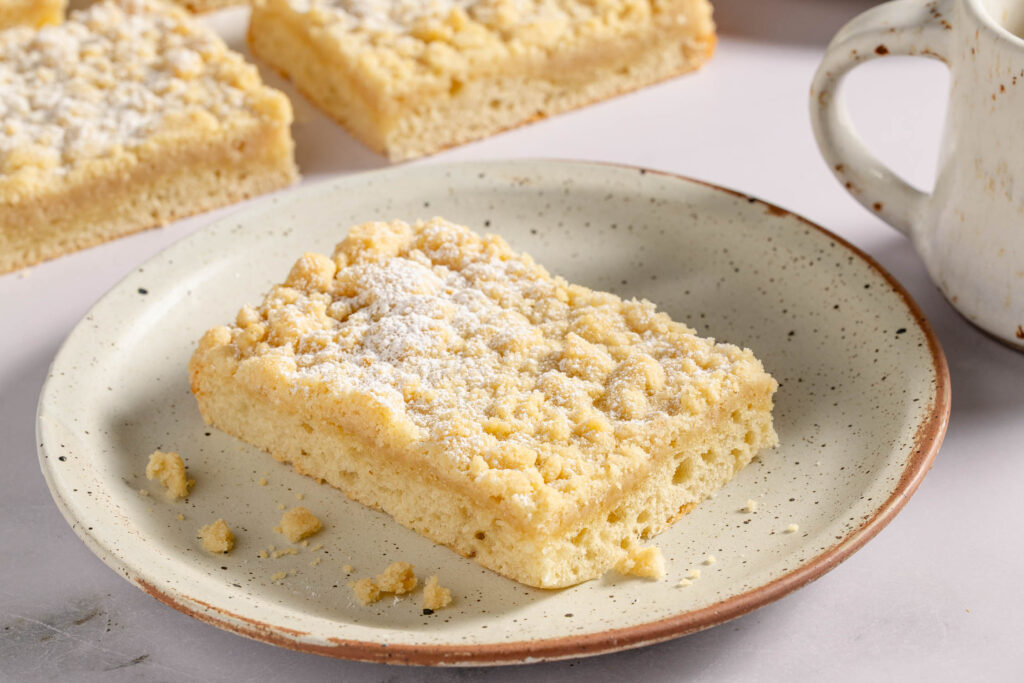
Streuselkuchen is one of the classic cakes for Kaffee und Kuchen (coffee and cake), a Sunday tradition of meeting or hosting friends and family for coffee and a slice of cake.
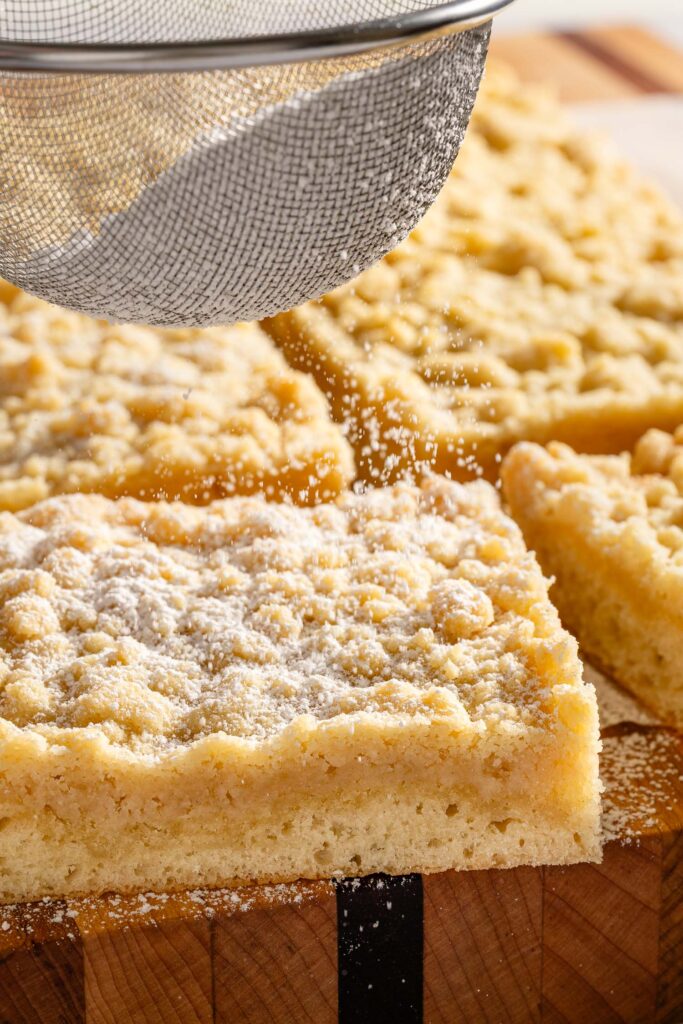
While the coffee brews, prepare some fresh whipped cream and serve slices of streuselkuchen with a generous dollop. For easier garnish, dust the slices with some powdered sugar instead.
How to Store Streuselkuchen
Streuselkuchen is best on the day it is made, but thanks to the tangzhong and slow overnight rise, this will keep another day or two. Store the cake, airtight, at room temperature for up to three days.
You can freshen it up in a warm oven for a few minutes, or in the microwave for a few seconds before serving.
More European Coffee Cakes to Try
If you like simple European cakes for afternoon coffee, try these next:
- Brunsviger: A Danish coffee cake with a soft yeast dough and buttery brown sugar topping.
- Bublanina: A Czech fruit-studded coffee cake that’s easy to adapt by season.
- Rustic Coffee Walnut Cake: A cozy walnut cake with deep coffee flavor.
Streuselkuchen: German Crumb Cake with Buttery Streusel
A classic German crumb cake — soft yeast dough, buttery streusel, and an overnight rise.
For the tangzhong
- 15 g all-purpose flour
- 75 ml whole milk
For the dough
- 240 g all-purpose flour
- 50 g granulated sugar
- 1 teaspoon instant yeast
- 1/2 teaspoon kosher salt
- All of the tangzhong
- 80 ml whole milk heated to 40°C (110°F)
- 42 g unsalted butter room temperature
- 1 teaspoon vanilla extract
- 1 large egg
For the streusel
- 200 g all-purpose flour
- 100 g granulated sugar
- 40 g light brown sugar
- 1/4 teaspoon kosher salt
- 140 g unsalted butter softened and cut into 1cm cubes
To assemble
- 1 large egg
- 15ml water
For the Tangzhong
- Make the tangzhong
In a small saucepan, whisk 15g (2 tablespoons) all-purpose flour into the 75ml (5 tablespoons) whole milk until smooth. Set the pan over medium heat. Cook, whisking constantly, until thick, about 1 minute. Remove from the heat and set aside to cool slightly.
For the Dough
- Mix the dough
To the bowl of a stand mixer fitted with the dough hook attachment, add 240g (2 cups) all-purpose flour, 50g (1/4 cup) granulated sugar, 1 teaspoon instant yeast, 1/2 teaspoon kosher salt, all of the tangzhong, 80ml (1/3 cup) warm milk, 1 large egg, 42g (3 tablespoons) softened unsalted butter, and 1 teaspoon vanilla extract. Mix on low speed (speed 1 on a KitchenAid) until the dough comes together, then increase to medium speed (speed 2) and continue kneading for 8 minutes. The dough should be soft and slightly tacky, but smooth and elastic. Avoid adding extra flour unless it is extremely sticky.
- Bulk fermentation
Shape the dough into a ball, and place it in a lightly greased bowl. Cover the bowl and let it rise in the refrigerator overnight, or up to 24 hours. The dough will not rise much.
For the Streusel
- Make the streusel
To the bowl of the stand mixer (no need to wash it out) fitted with the paddle attachment, add 200g (1 2/3 cup) all-purpose flour, 100g (1/2 cup) granulated sugar, 40g (3 tablespoons) light brown sugar, and 1/4 teaspoon salt. Whisk to combine. Add 140g (10 tablespoons) diced softened butter, and mix on medium speed until combined, with pea-sized and larger clumps, about 1 minute.
- Chill
Spread the streusel into a single layer on a small tray and let it chill in the freezer until ready to use.
Assemble and Bake
- Get ready
The next day, when ready to bake, lightly grease a 22x33cm (9×13-inch) pan with butter or baking spray. Line the pan with parchment paper so that the ends of the paper extend beyond the long sides of the pan, forming a sling.
- Shape the dough
Punch down the dough, then transfer it to the prepared pan. Gently press and stretch the dough to the edges of the pan.
- Preheat the oven to 175°C (350°F)
The next day, arrange a rack in the center of the oven and preheat to 175°C (350°F).
- Proof
Let the dough sit for 20 to 40 minutes while the oven preheats. It should lose some of its chill and puff slightly. It does not need to double.
- Add the streusel
In a small bowl, beat 1 large egg with 1 tablespoon of water. Use a pastry brush to brush the surface of the dough with a light layer of the egg wash. You won’t need all of the egg wash. Scatter the streusel evenly all over the dough.
- Bake
Bake the streuselkuchen in the preheated oven for 30 to 35 minutes, or until the streusel has begun to brown and the cake has puffed. The interior temperature at the center should be about 88-93°C (190-200°F).
- Cool and serve
Remove the pan from the oven and set it on a wire rack to cool for 20 minutes. Use the parchment paper sling to lift the cake out of the pan. Slice into squares, and serve warm or room temperature.
Recipe notes
Make-ahead: the dough rises overnight in the refrigerator, so most of the work happens the day before.
Streusel tip: Use very soft butter and mix just until it forms pea-sized clumps for that signature crisp/chewy texture.
Frequently Asked Questions
Yes. Streuselkuchen is a traditional German crumb cake, made with a lightly sweet yeast dough and a buttery streusel topping.
Streuselkuchen means “streusel cake.” Streusel comes from the German word streuen, meaning to scatter or strew.
No. Store it airtight at room temperature for up to 3 days. Refrigeration can dry out the yeast dough.
Yes. Skip the overnight rise and let the dough rise at room temperature for about 1 hour, or until slightly puffed.
Yes. Apples, plums, apricots, sour cherries, berries, or a thin layer of jam all work well under the streusel.
Yes. Let the cake cool completely, then wrap individual slices tightly and freeze for up to 2 months. Thaw at room temperature.

Leave a Reply